
Store It Like You Mean It: The Unsexy Science of Keeping Lab Compounds Stable
The Professor Walks In, And He Is Not Pleased
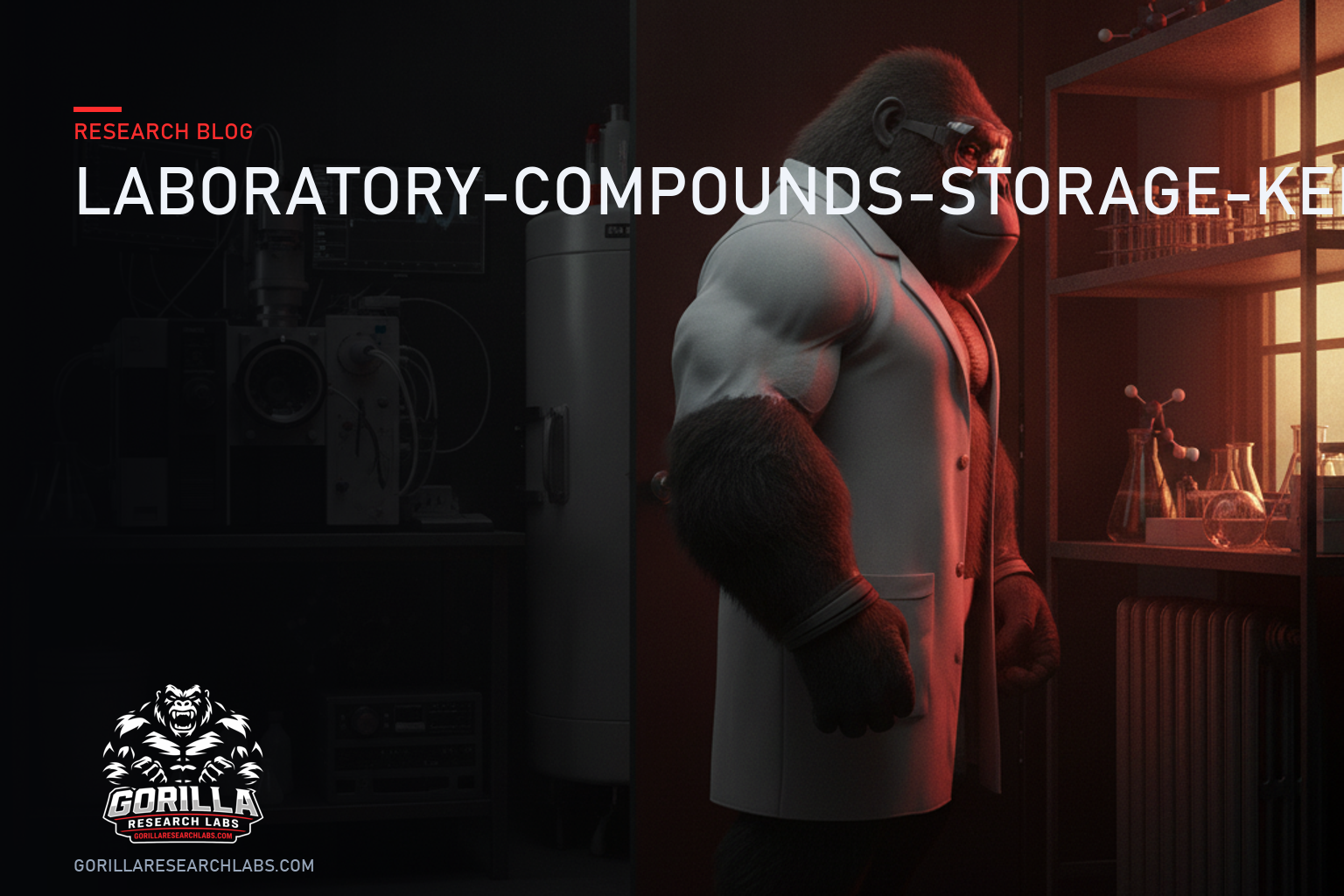
Picture a 400-pound charcoal silverback in a lab coat. His forearms are the size of fire extinguishers. His safety goggles are perfectly clean. And right now, he is standing dead still in the doorway, staring at a shelf above a radiator where a rack of vials is sitting in the warm, hopeful glow of a south-facing window. He does not roar. He does something worse. He sighs. A long, disappointed, primate sigh that says: we talked about this. Welcome to the least glamorous, most important corner of research: laboratory compounds storage . Nobody wins an award for it. Nobody posts it on the internet. But it is the invisible foundation that decides whether every experiment on top of it means anything at all.
Why a Warm Shelf Is a Silent Saboteur
Here is the uncomfortable truth the professor wants you to sit with: a compound doesn't have to look different to be different. Molecules are fussy little athletes. Give them heat, light, oxygen, moisture, and enough time, and they quietly rearrange themselves into something that is no longer the thing you wrote on the label. The tragedy is that it happens without drama. No smoke. No color change. No warning beep. The vial looks identical. It just isn't. And every measurement you take downstream inherits that hidden drift — like building a skyscraper on a foundation that's off by two degrees. Nobody notices until the whole thing leans. Sloppy storage is the number one way to turn a clean, repeatable result into a mystery you'll waste three weeks trying to reproduce. The professor has seen grown scientists blame their instruments, their math, and Mercury being in retrograde — when the real culprit was a freezer someone propped open with a lab stool.
The Big Four Enemies
Every stability horror story tends to trace back to the same short list of villains. Know your enemy: • Heat — the accelerant. Warmth speeds up basically every reaction that degrades a compound. A shelf near a heater or a sunbeam is not "room temperature." It's a slow-cooker. • Light — the sneak. Some molecules are photosensitive and break down under ordinary light. This is why amber vials and dark drawers exist, and it's why the professor treats clear glass on an open bench like a compound left out in the sun to tan. • Moisture — the freeloader. Humidity creeps in, and hygroscopic material drinks it up, changing concentration and inviting decay. Desiccants are cheap. Redoing six months of work is not. • Freeze-thaw abuse — the repeat offender. Every time something is frozen, thawed, refrozen, and thawed again, you stress it a little more. One or two cycles: fine. Treating the freezer like a fridge you open forty times a day: not fine.
The Professor's Best-Practice Playbook
Good storage isn't complicated. It's just disciplined , which is a different and harder thing. Here's the culture the professor drills into every lab he stomps through: • Store to the spec, not to convenience. If something wants to be cold and dark, it does not care that the cold-dark spot is annoyingly far from your bench. Honor the conditions the material actually needs. • Aliquot like a pro. Split material into small single-use portions so you thaw only what you need. This is the single best defense against freeze-thaw damage — you disturb the main stash approximately never. • Label like you'll forget everything, because you will. Contents, date received, date opened. Future-you is a stranger with a bad memory and a deadline. Be kind to them. • Log conditions, and mean it. Monitor and record your storage temperatures. A freezer that quietly drifts for a weekend can undo months of careful work, and you'll never know unless you were watching. • First in, first out. Use older stock before newer stock. Rotate it like a grocery store, not like a junk drawer. • Minimize the open door. Every time a cold unit hangs open while someone hunts around, everything inside takes a little heat bath. Get in, get out.
Why the Boring Stuff Is Actually the Point
Here's the mindset shift the professor wants to bench-press into your brain: storage isn't the annoying step before the real science. Storage IS the science. Reproducibility — the whole reason research is trustworthy — depends on the material being the same material every single time you reach for it. Controlled environments and tight handling protocols are how you protect that. It's the same integrity mindset behind documentation and testing: you build trust one unglamorous, disciplined habit at a time. So the next time you're tempted to leave a rack on a warm shelf "just for a bit," picture the sigh. Picture the goggles. Picture 400 pounds of silverback disappointment. Then move the rack. Store it like you mean it. The professor believes in you. Mostly.
References
- PMC — Peptide and protein degradation: oxidation, hydrolysis and aggregation
- PMC — Stability, storage and cold-chain handling of peptides and proteins
Authoritative sources cited for research context. Research use only — not medical advice.