
The Jungle Network: How a Research Community Keeps Each Other Honest
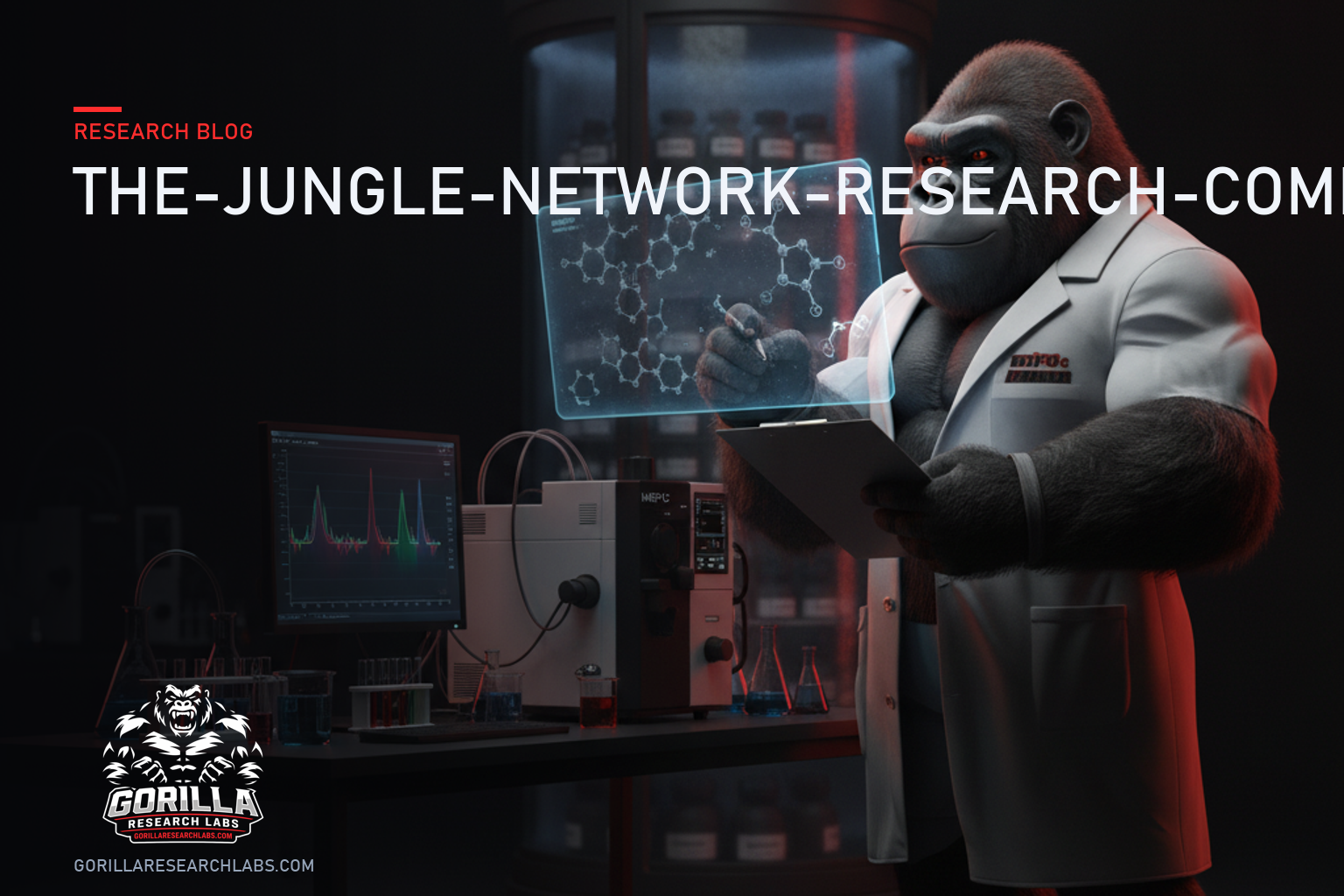
Somewhere in the canopy, a gorilla is checking your labels
Picture the wisest silverback you can imagine. Now put him in a lab coat, hand him a clipboard, and give him the unshakeable calm of someone who has read every footnote you tried to skip. That's the Professor, den leader of what we affectionately call the jungle network — a sprawling, loud, gloriously nitpicky research community that runs on one simple rule: show your work, or don't show up. The jungle network isn't a building. It's not a journal or a mailing list. It's a culture — a tangle of researchers swinging between labs, forums, and shared drives, all yelling the same beautiful thing at each other: "Cool result. Now prove it twice."
Why the loudest voice in the room is the fact-checker
In most social groups, the person who pokes holes in your story is the annoying one. In a research community, that person is the hero. The jungle network turns skepticism into a love language. When you post a finding, you're not looking for applause — you're looking for someone to say, "I tried to replicate this and here's where it wobbled." The Professor calls this "grooming the data." Gorillas groom each other to build trust and catch what individuals miss. Researchers do the same with methods sections. It's not an insult when a peer combs through your protocol line by line. It's affection. It's the community saying: we care enough about your work to test whether it survives contact with reality.
The four things the jungle network is obsessed with
Every strong research community shares a handful of non-negotiable habits. In the jungle, they're practically tribal: • Documentation, always. If it isn't written down, it didn't happen. The Professor's motto: a protocol living only in your head is a rumor, not a method. • Reproducibility over reputation. A result nobody else can recreate isn't a discovery — it's a very confident guess. The community values the finding that survives other hands. • Honest storage and labeling. Mislabeled samples and mystery folders named "final_v7_REAL_actual" are the network's shared nightmare. Clean records are a form of respect for future-you and future-everyone. • Transparent methods. Sharing the boring middle steps — the failed runs, the tweaked variables, the "we did it this way because the first way flopped" — is where reproducibility actually lives.
Keeping each other honest is a team sport
Here's the quietly radical thing about a healthy research community: nobody's honesty runs on willpower alone. It runs on witnesses . When your protocols are public, your storage is auditable, and your methods are open to anyone with a raised eyebrow and a spare afternoon, cutting corners stops being tempting. Not because people are saints — because the jungle is watching, and the jungle takes notes. The Professor loves this part. "Integrity," he'll rumble, adjusting glasses that are somehow always slightly too small for a 400-pound primate, "is just documentation with a memory." A community that writes everything down can't quietly rewrite the story later. The record keeps everyone accountable, including the record-keepers.
Reproducibility is the group hug of science
There's something genuinely wholesome underneath all the rigor. When a stranger three time zones away reruns your protocol and gets your result, that's not just validation — it's connection. You've shared something real enough to travel. The jungle network treats every successful replication like a knuckle-bump across the canopy: I trusted your notes enough to try, and your notes held up. That's the culture we celebrate. Not lone geniuses guarding secrets, but a community that swings forward together — sharing the map, marking the dead ends, and cheering when someone else makes it across.
Join the troop
The jungle network doesn't care how big your lab is or how fancy your equipment looks. It cares whether you label your samples, write your methods, and welcome the friendly skeptic who wants to check your math. Do that, and you're already part of the troop. The Professor is up in the canopy, clipboard ready, coffee somehow still steaming. He's not there to catch you failing. He's there to make sure that when you succeed, everybody can follow you up the tree. That's what a research community is for.
References
- NIH — Rigor and Reproducibility in Research
- U.S. FDA — Data Integrity and Compliance With Drug CGMP (Guidance)
Authoritative sources cited for research context. Research use only — not medical advice.