The Cell's Pit Crew: Kinases, Second Messengers and the Rest of the Signaling Squad
Lights Out and Away We Go: Inside the Cell's Pit Lane
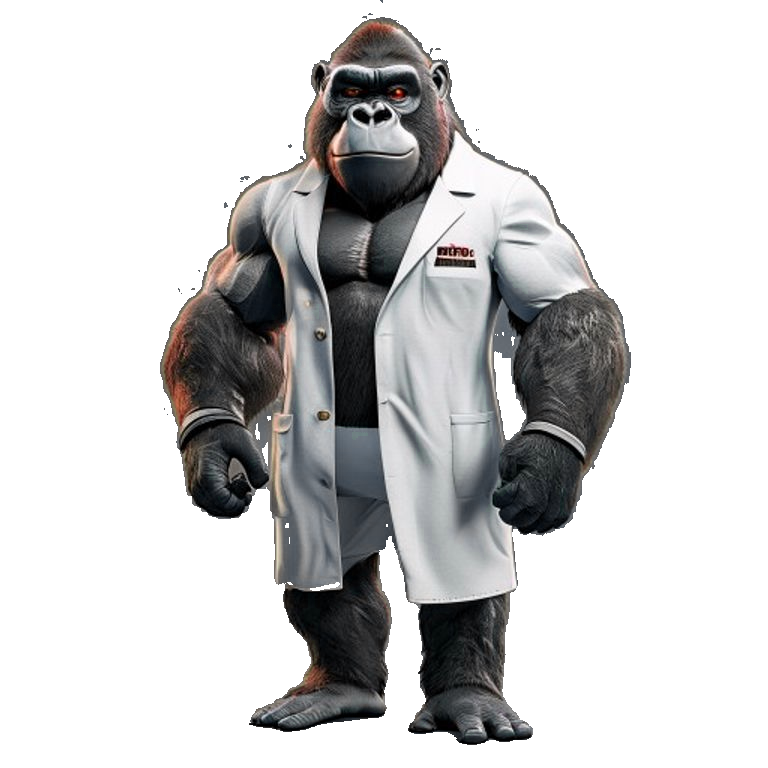
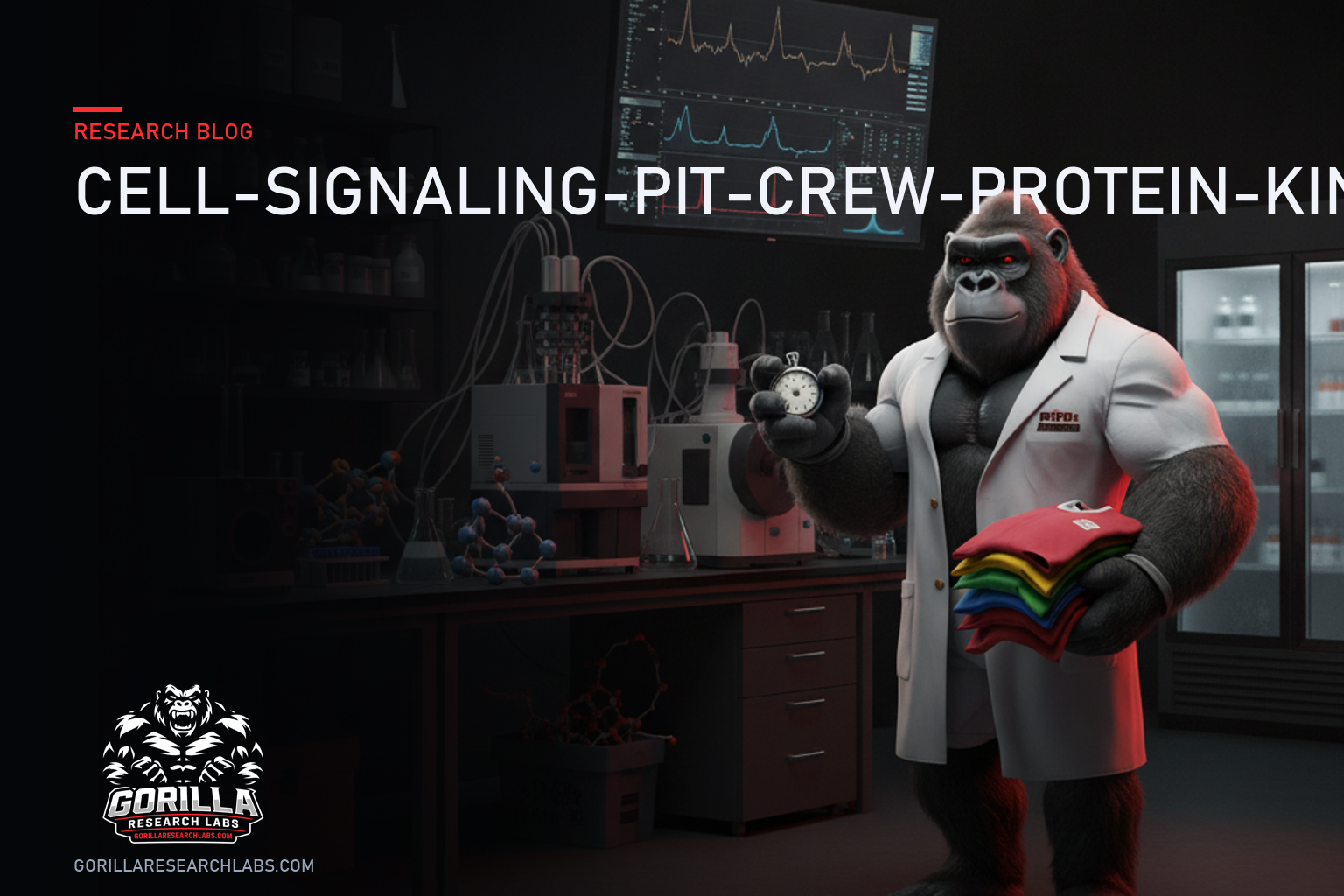
Picture a Formula 1 pit stop. Two seconds of pure, choreographed chaos. Twenty people, each doing exactly one thing, absurdly well, so a car can rocket back onto the track. Now shrink that whole operation down until it fits inside a single cell, and congratulations: you have just met a signaling pathway. Our resident silverback professor is standing trackside in his lab coat, stopwatch in one enormous hand, a stack of numbered jerseys in the other. He clears his throat. "Every crew member has a job," he rumbles. "Learn the roster, and cell biology stops feeling like alphabet soup." Let us hand out those jerseys.
The Roster: Who Does What in the Pit
Signaling pathways look intimidating until you realize they are basically the same handful of characters showing up in different uniforms. Here is the starting lineup: • Receptors — the Lollipop Signalers. These sit on the cell surface waving the car in. A molecule floats up, docks into the receptor, and that "click" is the green flag. Nothing happens in the pit until the receptor says go . • Enzymes — the Tire Guns. Fast, forceful, purpose-built. Enzymes are the tools that actually do the mechanical work, torquing molecules into new shapes in fractions of a second. • Protein kinases — the Crew Chief. The star of today's show. More on this legend below, because the professor is holding the number-one jersey and grinning. • Second messengers — the Radio Comms. Tiny molecules like cyclic AMP or calcium ions that sprint the message from the pit wall to every corner of the garage. Small, fast, everywhere at once. • Transcription factors — the Strategists in the Garage. Way back in the nucleus, these decide which instructions get pulled from the playbook and read aloud. • Regulatory proteins — the Marshals. The ones waving flags and slamming on brakes. They keep the whole frantic operation from spinning out.
The Crew Chief Steps Up: Protein Kinases
Here is where our professor plants his feet. "If I could give a Most Valuable Player trophy," he says, tapping the number-one jersey, "it goes to the protein kinases ." Their job is deceptively simple: take a phosphate group and slap it onto another protein. That is it. That is the move. In the trade it's called phosphorylation, and it works like a light switch. Flip it on, and a sleepy protein suddenly springs to life, changes shape, and joins the race. Flip a different one, and a protein goes quiet. Why does one crew member get so much love? Because protein kinases are the relay . One activated kinase can flip the switch on the next kinase, which flips the next, which flips a hundred more. A single tap at the receptor becomes a roaring, amplified signal by the time it reaches the finish line. It is the biological version of one radio call setting the entire garage into motion. The human genome codes for over 500 of these little crew chiefs, each with its own specialty, its own preferred targets, its own corner of the track.
Watch the Whole Stop in One Breath
Let's run a lap. A signal molecule taps a receptor on the cell surface — green flag. The receptor nudges an enzyme , which cranks out a burst of second messengers that flood the interior like radio chatter. Those messengers wake up the protein kinases , who go down the line flipping switches, amplifying as they go. The signal reaches the transcription factors in the nucleus, who pull the right pages from the playbook. And the whole time, regulatory proteins stand ready to wave the message off the instant the job is done. Tap. Relay. Amplify. Respond. Reset. All faster than you can say "box, box, box."
Why the Professor Cares (and Why You Should Too)
Understanding this roster is the whole reason researchers get out of bed. When scientists study protein kinases and the crew around them, they are essentially learning how the pit operates, so they can understand what happens when a crew member fumbles a stop. This is fundamental biology: the vocabulary that lets curious minds ask better questions about how living systems talk to themselves. The silverback tosses the last jersey onto the pile and checks his stopwatch one final time. "Same crew, different race, every single cell, all day long," he says. "Now you know the names. Next time someone says signal transduction , you will not see soup. You will see a pit stop." He winks under the red garage lights. "Lights out." Gorilla Research Insights shares the fun side of the science. This roster is educational storytelling about how cells communicate — no products, no protocols, just the biology, made shareable.
References
- NCBI Bookshelf — Molecular Biology of the Cell: Signaling
- PMC — Cell signaling pathways and receptor biology
Authoritative sources cited for research context. Research use only — not medical advice.